The Hidden Cost of Getting Damp and Mould Wrong the First Time
Every repeat visit, rework order, and disrepair claim has the same underlying story: we treated what we could see, not what was actually driving it.
There is a figure most housing finance teams never see. It is not the cost of the first repair. It is the cost of the second one. And the third.
Damp and mould cases are among the most frequently repeated in social housing repairs programmes. A tenant reports a problem. An inspection takes place. Remedial work is carried out, perhaps treatment, repainting, improved sealing. The case is closed. Within months, the conditions return. The tenant reports again. The cycle continues.
That cycle has a cost. Not just in direct spend, but in surveyor time, contractor visits, complaint handling, case management, and the increasing risk of disrepair proceedings. More importantly, it has a cost for the tenant living through it.
Why the first repair often isn't enough
Damp and mould is not a single-cause problem. Visible mould on a wall is a symptom. The environment that created it may involve poor ventilation, persistently low indoor temperatures, high moisture load from occupancy, a structural issue allowing cold bridging, or some combination of these factors.
When a team treats the visible symptom without understanding the underlying environment, they are addressing the result rather than the cause. The treatment may be carried out correctly. The repair may be completed to standard. But if the conditions that allowed damp and mould to develop remain unchanged, the outcome is likely to be the same.
This is not a criticism of repairs teams. It is a recognition that triage without diagnosis produces incomplete outcomes. And that the information needed for better diagnosis has, until recently, not been readily available.
The cost shows up later
From a finance perspective, the cost of a repeat visit is not just the direct cost of the visit. It includes the management overhead of reopening a case, the reputational cost of a tenant whose home keeps returning to the same condition, and the escalating legal exposure if the case moves toward a formal complaint or disrepair claim.
Research and operational experience in the sector consistently show that repeat damp and mould cases are disproportionately resource-intensive. A relatively small number of homes account for a significant share of repairs spend and complaint volumes. In many of those homes, the repeating pattern reflects incomplete triage, not inadequate repair work.
What better first-visit triage looks like
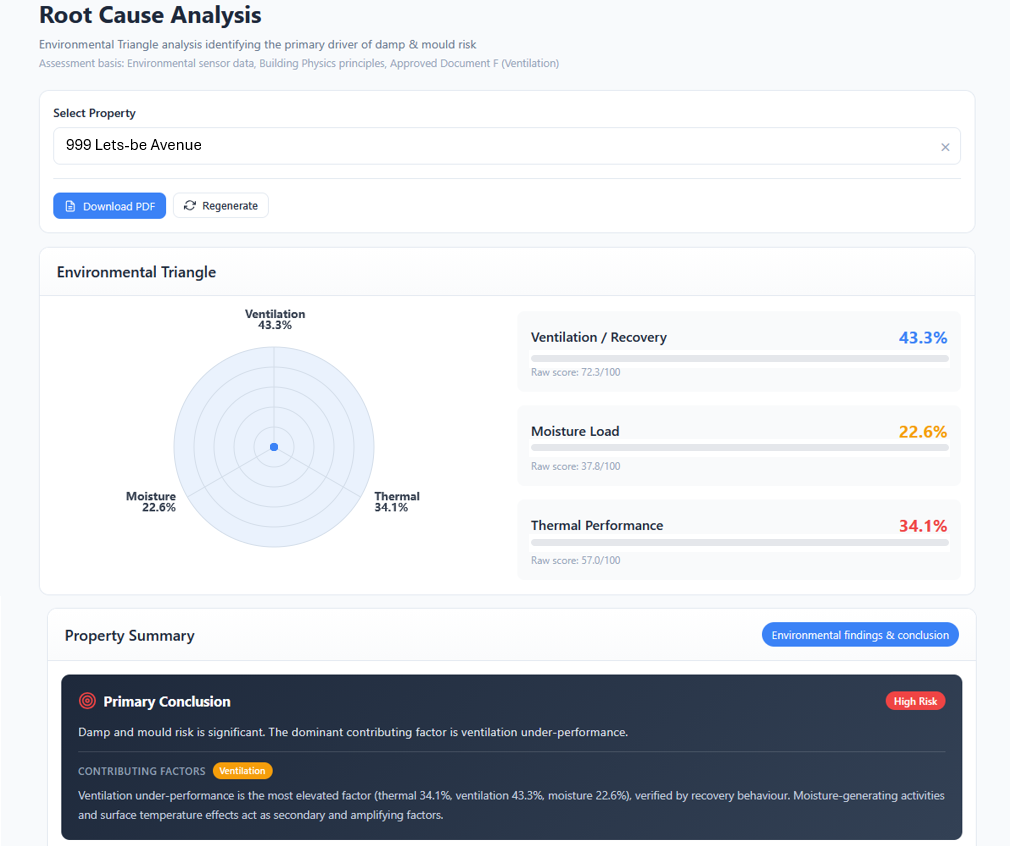
COSIE homes Root Cause Analysis is designed to change what teams know before, and during, the first intervention.
By continuously monitoring temperature, humidity, and dewpoint behaviour in the home, and applying building-physics-informed logic to that data over time, it can identify what is most likely driving the risk before the first visit takes place. Is ventilation the primary factor? Is the home consistently underheated? Is moisture load from occupancy the dominant driver? Is it a combination of these?
That information changes the first visit. Instead of inspecting to identify the problem from scratch, the team arrives with a clearer picture of what to look for and what the intervention should address.
It also changes the case record. The rationale for the recommended action is documented, time-stamped, and based on continuous in-home evidence, not a single inspection.
Closing the evidence loop
One of the most important features of a cause-led approach is what happens after the repair. COSIE homes continues to monitor conditions after an intervention, so teams can see whether the action improved the environment in practice.
That matters operationally: it tells teams whether the intervention worked or whether further action is needed. It matters for governance: it provides evidence that spend achieved an outcome, not just that a work order was raised. And it matters increasingly for compliance: the expectation to show that a response was effective, not just that it was carried out, is a growing regulatory and audit requirement.
The most expensive damp and mould repair is not the first one. It is every visit that follows a first repair that did not address the right thing. Improving triage does not require more inspections. It requires better information before the first one.
Arrange a conversation about how Root Cause Analysis can improve first-time resolution in your housing stock. Go to Landing Page